
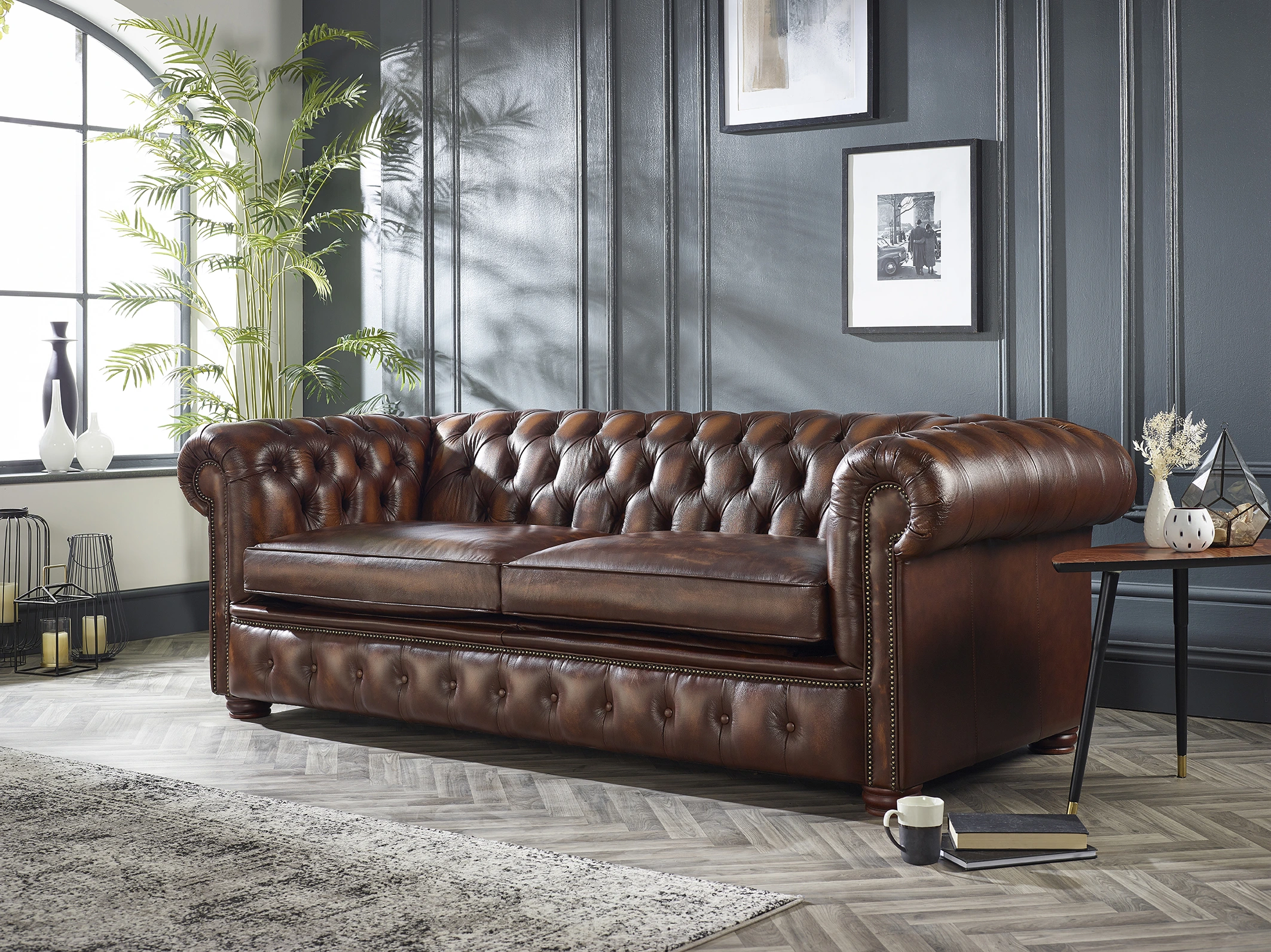
Why Nailhead Trim Defines the Chesterfield Look
You can usually recognize a Chesterfield from across the room. The deep button tufting and the gracefully rolled arms tend to get most of the attention. Look a little closer and you notice another detail quietly shaping the whole piece.
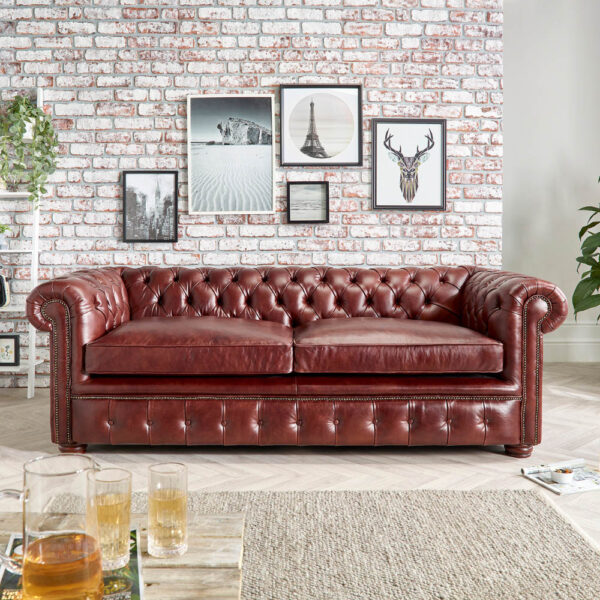
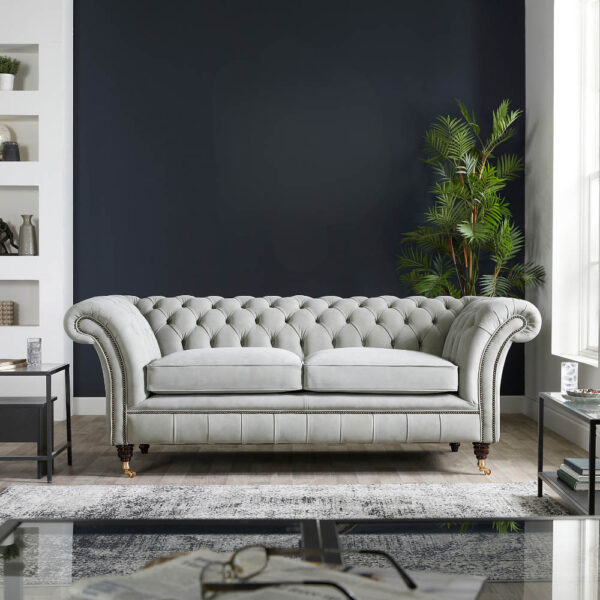
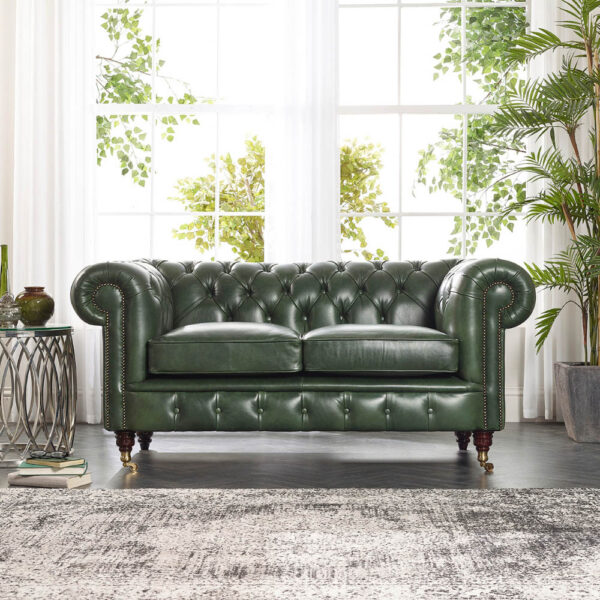
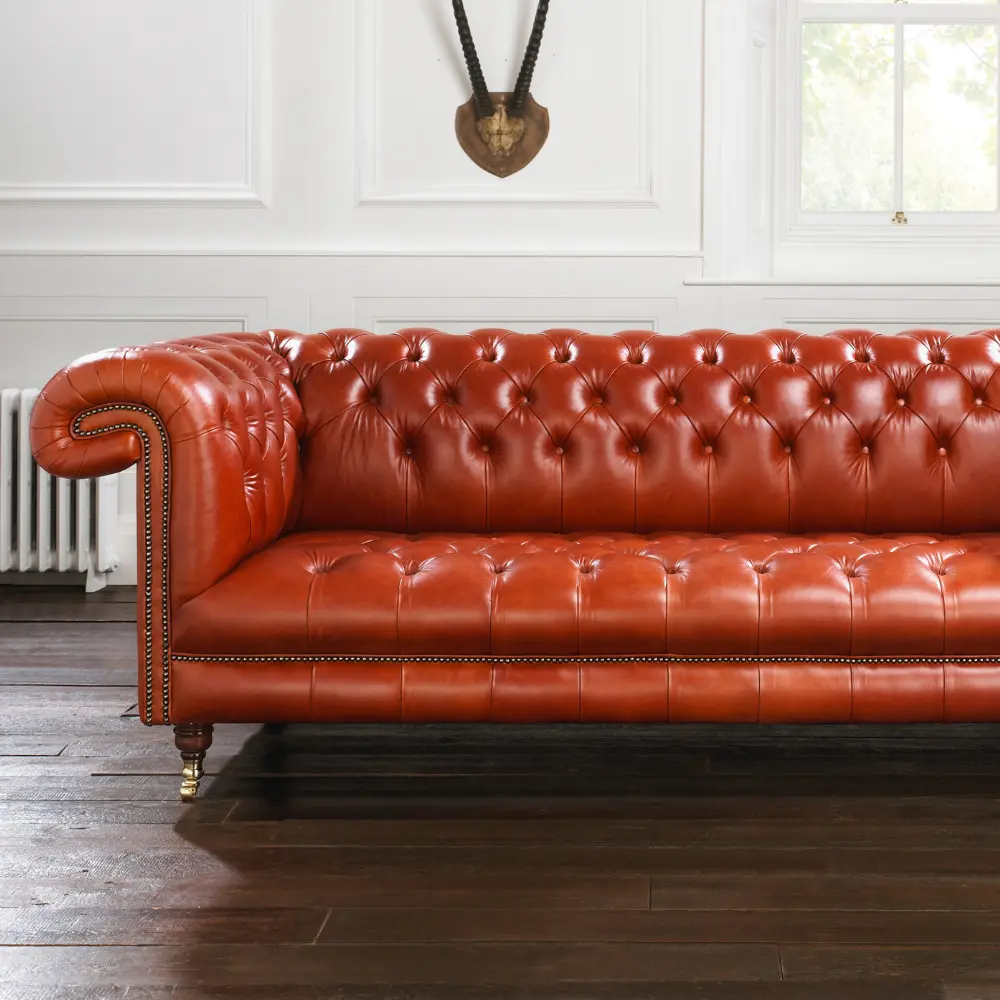
Running along the arms, the base and the frame is a neat row of metal studs known as nailhead trim. It outlines the silhouette the way a frame outlines a painting. Most people never consciously notice it, yet the sofa would look strangely unfinished without it.
The trim does more work than it gets credit for. A nailhead trim Chesterfield feels balanced, structured and complete, which is exactly why the feature has lasted for centuries. Here is a closer look at what nailhead trim is, where it came from and why it still defines the handcrafted Chesterfield today.
What Is Nailhead Trim?
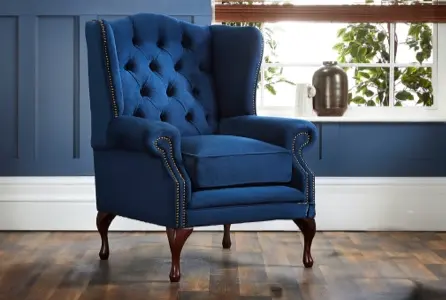
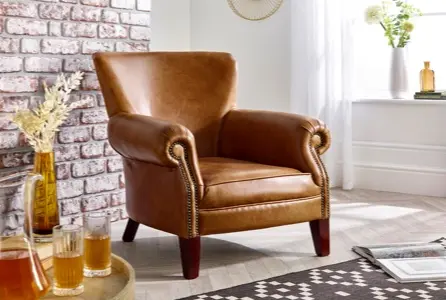
Nailhead trim is a decorative border made up of individual metal studs, sometimes called nailheads. Each one is positioned along the edges of the upholstery, usually where the leather meets the frame. Together they create a continuous line that follows the shape of the sofa.
The trim can be applied in different ways. Some designs space the studs evenly with small gaps between them, while others place them side by side in a solid, unbroken line. Either approach adds definition, though the effect can range from subtle to bold depending on the spacing and the finish.
A Detail Rooted in Craftsmanship
Nailhead trim began as a practical solution rather than a decorative one. Early upholsterers used tacks to secure the leather firmly to the wooden frame. Those functional fixings gradually became part of the design itself.
Over time, makers realized the studs could be arranged deliberately to enhance the look of a piece. What started as a way to hold leather in place turned into one of the most recognizable signatures in furniture. That blend of function and beauty sits at the heart of the traditional upholstery methods still used today.
How Nailhead Trim Defines the Chesterfield Look
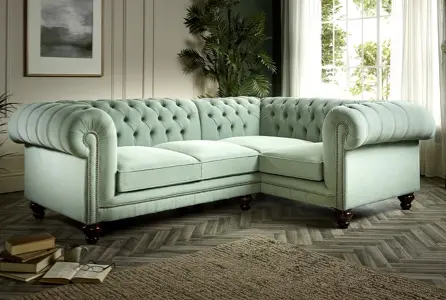
The Chesterfield is all about strong, confident lines. The rolled arms sit level with the back while the deep buttoning draws the eye across the surface. Nailhead trim ties it all together by tracing the outline of the frame.
Without that border, the silhouette can feel softer and less defined. The trim gives the sofa its crisp, tailored edge, almost like the piping on a finely made jacket. It is a small feature that has a surprisingly large effect on how polished the finished piece looks.
The Way It Plays Against Leather
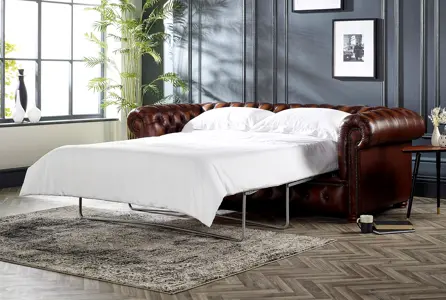
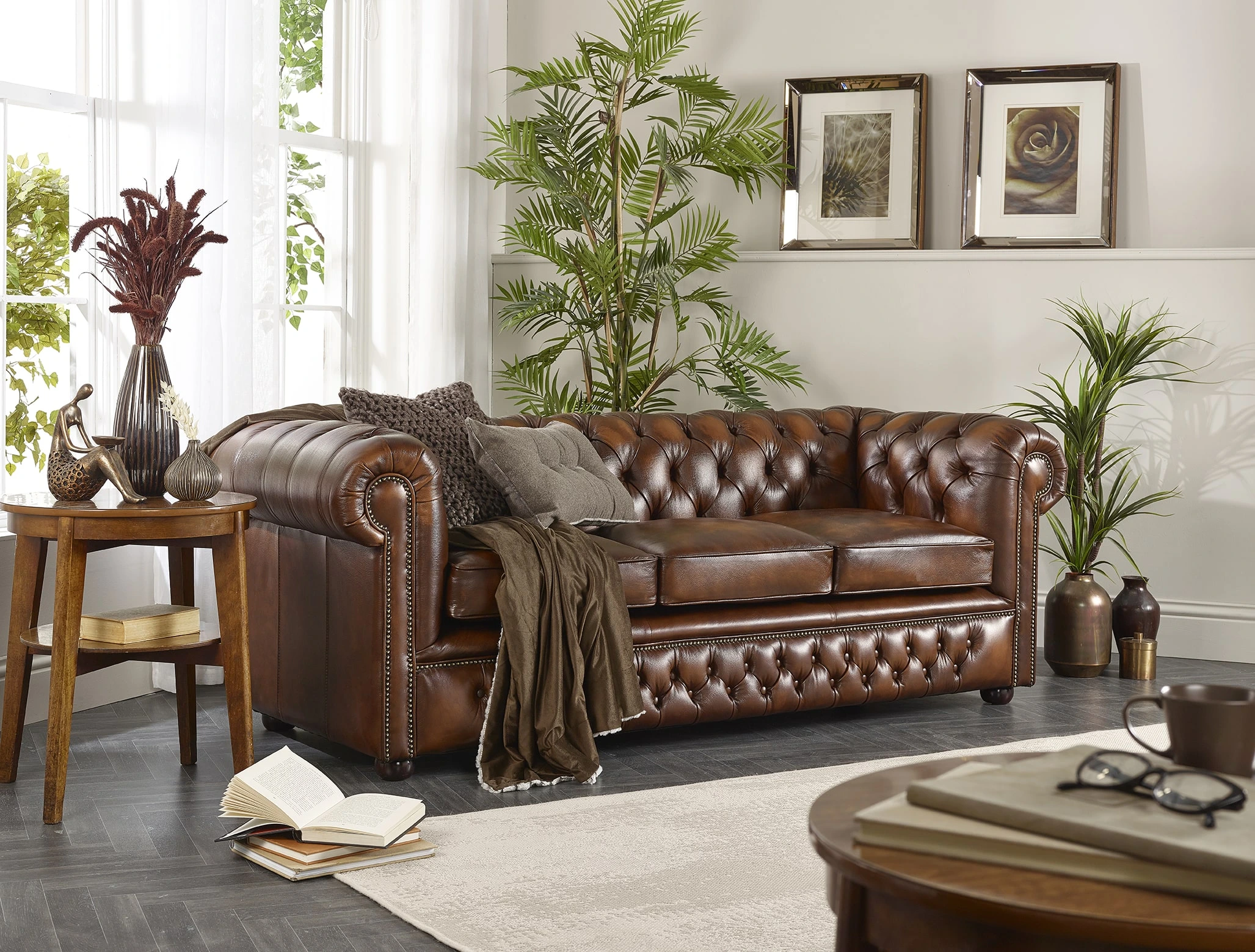
Nailhead trim looks its best when it has something rich to contrast against, which is why it pairs so naturally with leather. The soft sheen of the studs stands out beautifully against the depth of a leather Chesterfield, catching the light as you move around the room.
The effect shifts with the color of the hide. On a black leather sofa the trim feels sharp and modern, while on brown or tan leather it looks warmer and more traditional. Each combination gives the same design a slightly different personality.
Finishes That Change the Whole Feel
One of the reasons nailhead trim remains so popular is how versatile it is. The finish of the studs can completely change the mood of a sofa. Antique brass brings warmth and a sense of history, polished nickel feels clean and contemporary, while pewter and bronze sit comfortably in between.
Spacing matters just as much as finish. Evenly spaced studs create a lighter, more classic feel, while closely set trim looks bolder and more decorative. Many of these details, sometimes listed as stud detailing, can be chosen when you order a custom Chesterfield to suit your own taste.
A Feature That Shows the Maker’s Skill
Applying nailhead trim by hand is far more skilled than it might appear. Each stud has to be placed at exactly the right distance from the last, following the curve of the arms and the line of the base without ever wandering. A single stud set slightly out of line is enough to disrupt the whole row.
Precision like that is one of the quiet markers of quality. It is often these small, patient details that explain why two similar sofas can feel completely different once you see them side by side. Furniture made by machine rarely achieves the same consistency.
Styling a Nailhead Trim Chesterfield at Home
A nailhead trim Chesterfield works as a natural anchor in almost any room. The defined edges give the space a sense of structure, so the sofa becomes a feature rather than simply another seat.
To let the trim shine, keep the surrounding palette relatively calm and allow the metal accents to carry some of the detail. Pulling those tones into nearby pieces, from lamp bases to picture frames, helps the whole scheme feel considered. If you want more ideas, our guide to accent colors for a leather sofa is a good place to start.
The Detail That Completes the Design
Nailhead trim might be one of the smallest details on a Chesterfield, but it plays a leading role in the look everyone recognizes. It frames the silhouette, sharpens the lines and adds the finishing touch that makes the design feel complete.
The next time you admire a Chesterfield, look at the trim tracing its edges. That row of studs is doing far more than you might think to create the timeless character of the piece.
Explore the handcrafted collection at Distinctive Chesterfields and discover the details that make each design unmistakably its own. From the leather to the trim, every element is crafted to be admired for years to come.
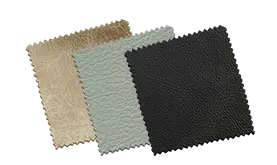
Five samples, posted free Order your swatches
Screens lie about color. Order five leather or fabric swatches and see them in your own light before you spend anything.